Design, build and operation of a solo online vintage leather jacket store.
UX/UI Design E-commerce No-code Dev
My role
Founder / Designer / Developer / Marketer / Operations
Date
October 2022 → June 2025
Project Type
Independent secondhand clothing store
Tools
Figma / Framer / Shopify / Photoshop / Notion / Vinted / Excel


In short
For two and a half years I ran Julio's Vintage as a one-person business: sourcing, restoring, photographing, designing, building and shipping. I sold more than 1,000 secondhand leather jackets through a store I designed and built myself, with no team and no external funding. It's the project where design, e-commerce and operations had to actually work together, because if any one of them broke, nothing shipped.
Context
I've been into vintage clothing for years, and leather jackets in particular. The plan was simple: turn that into a focused store where other enthusiasts could find pieces I'd personally selected and prepared, instead of digging through endless generic listings.
The problem
Buying a good secondhand leather jacket online is mostly a patience game. The big resale platforms aren't specialized, so finding quality means scrolling through hundreds of irrelevant listings across several marketplaces, with inconsistent photos and descriptions and no real curation. For someone who knows what they want, that's a lot of friction for a category that's all about the specific piece.
I wanted the opposite: one place, curated, where every jacket was properly shot and described, and where buying took two clicks.
What I built
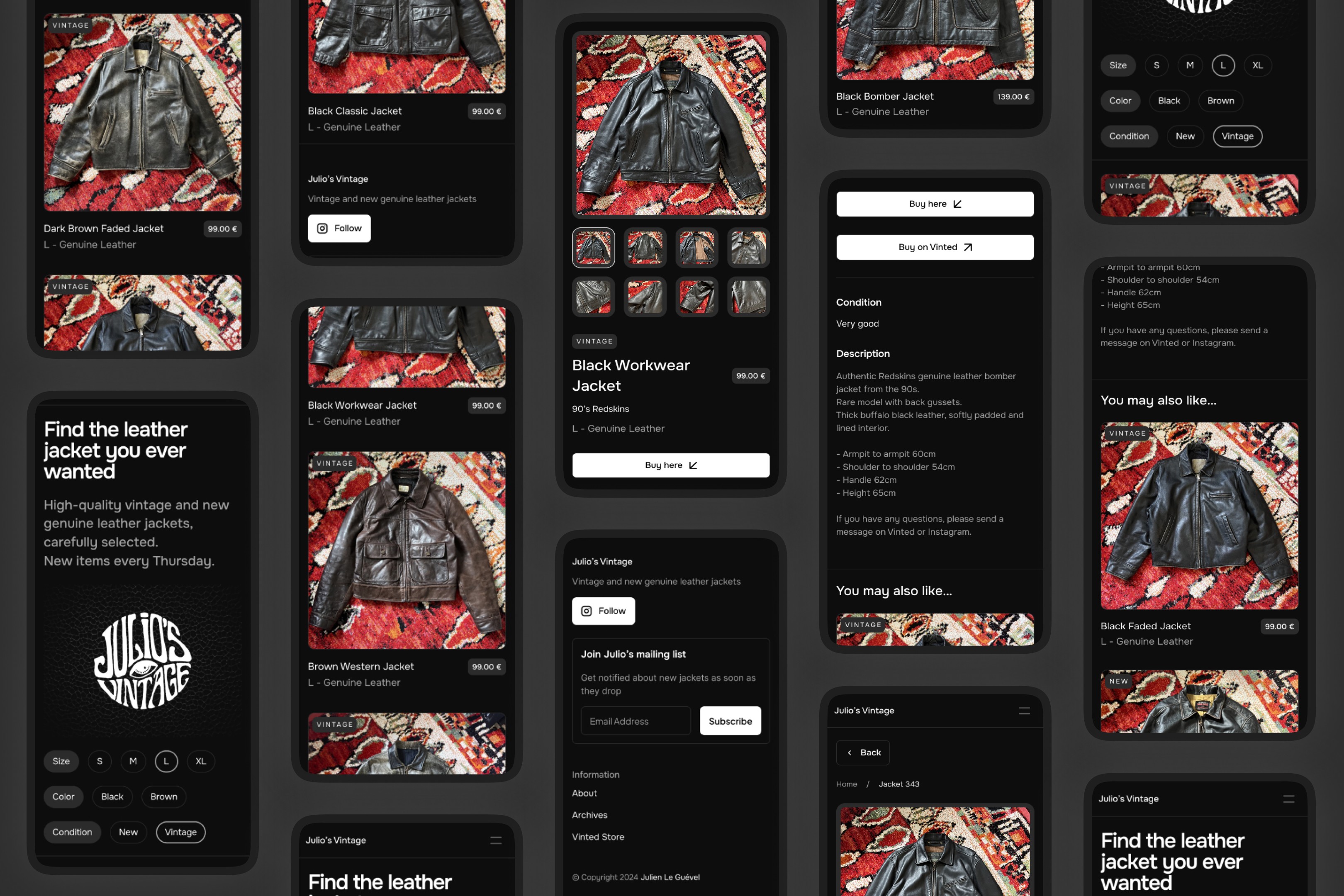
A deliberately minimalist store that put the jackets front and center and got out of the way. A few decisions defined how it worked:
A weekly drop. Every Thursday I released a small batch of new jackets. The rhythm gave regulars a reason to come back and kept the catalog feeling fresh rather than like a warehouse.
One of everything. Each jacket was unique and stock was capped at one per order, so the scarcity was real, not a marketing trick. Sold pieces moved to an archive page, which kept things honest and quietly showed buyers what they'd missed.
Two ways to buy. A "Buy" button through Shopify, plus a link to my Vinted account for the same piece. That let buyers use whichever payment method and platform they already trusted, and Vinted is the largest secondhand platform in Europe, so meeting people there mattered.

How I worked
I did everything myself, so design decisions were never separate from operational ones. Here is what actually shaped the result.
I designed for the product, not the brand.
Clean layout, lots of space, neutral interface, so the jacket was always the loudest thing on screen. The "vintage feel" came from the imagery and photography, not from decorative UI.
I built it to run solo.
Figma to Framer for the front end, connected to Shopify for payment and order management. A no-code stack was a deliberate choice: it let one person design, update and operate the store without a developer in the loop, which is the only reason a weekly drop was sustainable.
I made buying frictionless on purpose.
Simple navigation, clear filters, product zoom and image galleries, fully responsive. When someone wants a specific jacket, the job of the interface is to not get in the way.
I let the numbers correct me.
I watched what sold, what stalled, and what buyers asked about, then adjusted sourcing, pricing and presentation accordingly. Over 1,000 sales, that feedback loop taught me more about the market than any upfront research could.
Outcomes
Over 1,000 secondhand leather jackets sold, run entirely solo from sourcing to after-sales. Beyond the numbers, the project sharpened two things at once: my UX/UI and no-code skills on the design side, and a real, hands-on understanding of e-commerce operations, pricing and resale strategy on the business side. The most satisfying part was simpler than that, watching jackets I'd hunted down and restored go to people who actually cared about them.
Takeaway
Running every role at once, designer, developer, photographer, packer, customer support, is the part that taught me the most. It forced me to design with the whole system in mind: a beautiful product page is worthless if shipping and after-sales fall apart behind it. That perspective, treating design as one piece of a working business rather than the goal in itself, is what I took away and what I bring into client work now.
